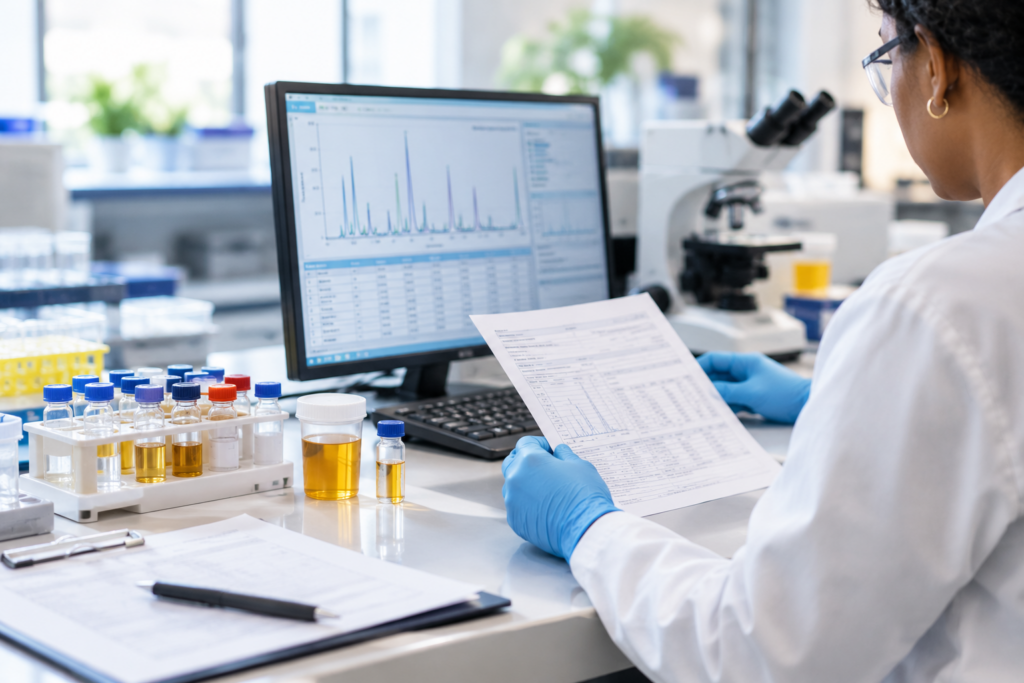
When a loved one dies unexpectedly, toxicology testing after death often becomes part of the answer families are searching for. Understanding what this testing actually involves can help you know what to expect and what the results can tell you.
What Toxicology Testing Looks For
Toxicology testing analyzes body fluids and tissue samples for substances that may have contributed to death. This can include:
- Prescription and over-the-counter medications
- Illegal drugs
- Alcohol
- Poisons or toxic chemicals
- Carbon monoxide or other gases
The goal is to determine whether any of these substances played a role in the cause of death.
How Samples Are Collected
During an autopsy, a forensic pathologist collects blood, urine, and sometimes tissue samples for testing. These samples go to a specialized laboratory rather than being tested on-site, since toxicology analysis requires equipment not available during the exam itself.
Why Toxicology Results Take Time
Families often want answers quickly, but toxicology testing after death typically takes four to six weeks. Laboratories test for a wide range of substances, and some compounds require more detailed analysis than others.
A rushed result risks missing something important, so accuracy takes priority over speed.
How Histology Adds to the Picture
Toxicology looks for substances. Histology looks at the body itself. A forensic pathologist examines small tissue samples under a microscope to find disease or damage that can’t be seen with the naked eye.
This can show whether a heart condition or other illness played a role in the death. It can also reveal inherited conditions, which gives living family members a chance to get screened early.
How Results Fit Into the Final Report
Toxicology and histology findings are combined with the physical examination and any additional evidence to form the final cause and manner of death.
In many cases, testing confirms what the physical exam suggested. In others, it reveals something unexpected that changes the full picture.
You May Not Need a Full Autopsy to Get Answers
Many families assume a full private autopsy is the only way to get independent answers. FPS offers toxicology testing after death and histology testing as standalone services, so if you have one specific question, we can test for exactly that. Standalone testing often makes sense when:
- Official results were unclear, incomplete, or never shared with your family
- You want to know if a specific substance played a role
- You want to rule out an underlying or inherited condition
- A full autopsy isn’t financially possible right now
Standalone testing costs significantly less than a full private autopsy. FPS uses independent, accredited laboratories, and a board-certified forensic pathologist with no connection to the original case reviews every result. If samples already exist, we coordinate their transfer. If not, we can arrange collection.
Learn more about how FPS uses histology and toxicology testing to help families find answers here.
Frequently Asked Questions
Can toxicology testing detect something days or weeks after a substance was taken?
In many cases, yes. Some substances remain detectable in tissue long after they leave the bloodstream.
Will I be told which specific substances were tested for?
Typically, yes. The final report usually lists tested substances and their results.
Do I need a full autopsy to get toxicology or histology testing?
No. FPS offers both as standalone services, and they cost significantly less than a full private autopsy. You receive a clear cost breakdown before any testing begins.
Check out more Frequently Asked Questions here.
Need Answers About a Loved One’s Death?
Forensic Pathology Services (FPS) works with families nationwide who are seeking answers about a death. Whether you need a full private autopsy or targeted toxicology or histology testing, our 180+ board-certified forensic pathologists can help you decide what makes sense for your situation. Contact us here.