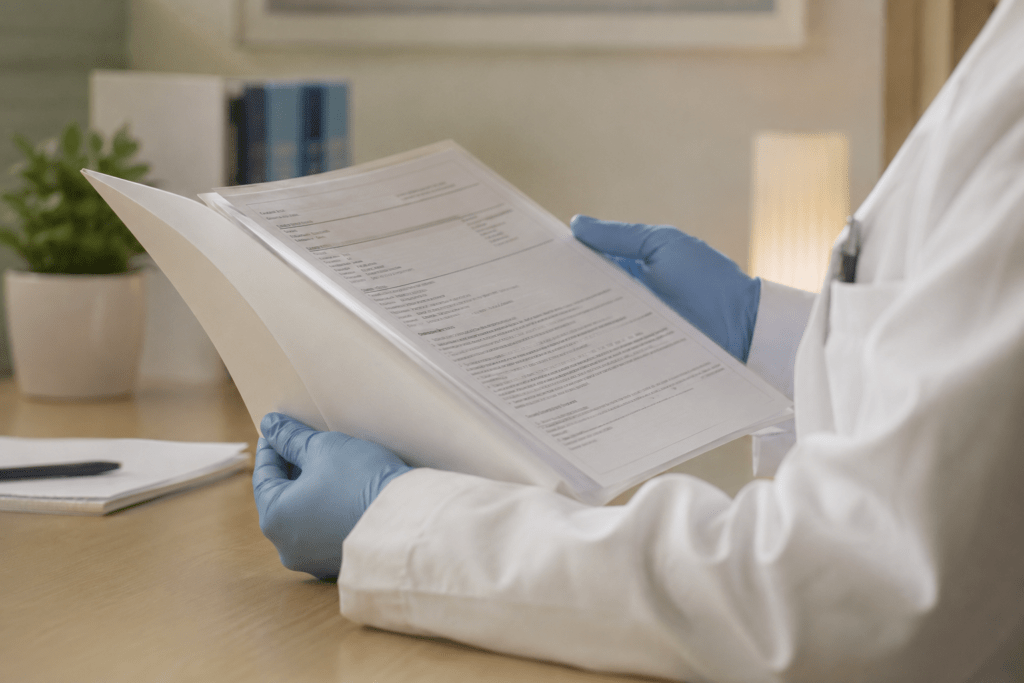
After an autopsy is completed, families often ask, “What does an autopsy report include?” Knowing what an autopsy report includes helps you understand what you are receiving and how to use it. For families seeking answers, this document is often the most important record they will have.
The Main Sections
Every forensic autopsy report follows a standard structure. While the format varies slightly by pathologist and case type, most reports include:
- Cause of death: The specific medical finding that directly led to death.
- Manner of death: The classification: natural, accident, homicide, suicide, or undetermined.
- External examination: Observations about the body’s condition, injuries, or markings on the outside.
- Internal examination: Findings from the organs, tissues, and internal systems.
- Toxicology results: If testing was ordered, drug, alcohol, or substance findings appear here.
- Microscopic findings: Results from tissue samples, when applicable.
- Summary and opinion: The pathologist’s conclusions drawn from all findings.
How to Read the Report
Autopsy reports use medical and anatomical terminology. If you are not in a medical field, parts of the document will be difficult to follow on your own. That is expected. A forensic pathologist can walk you through what an autopsy report includes section by section and explain the findings in plain language.
Every FPS private autopsy includes the option to sit down with the forensic pathologist who performed it, so you fully understand the findings.
This review is especially important when the report raises new questions or conflicts with an earlier cause of death determination.
When the Report Carries the Most Weight
The autopsy report is a formal medical document that holds significant value in several situations:
- Disputing a cause of death listed on a death certificate
- Supporting a life insurance or AD&D claim
- Providing evidence in a legal proceeding
- Getting clarity after an unexpected or unexplained death
Frequently Asked Questions
How long does it take to receive the final report?
The full written report typically takes two to four weeks after the examination. Specialized testing can extend that timeline.
Can I share the report with an attorney or insurance company?
Yes. The report belongs to the family and can be shared with any party you choose.
Check out more Frequently Asked Questions here.
Need Help Arranging a Private Autopsy?
Forensic Pathology Services (FPS) works with families nationwide who are seeking answers about a death.
Our 180+ board-certified forensic pathologists can help evaluate situations where families have concerns about the cause of death and discuss possible next steps. Contact us here.